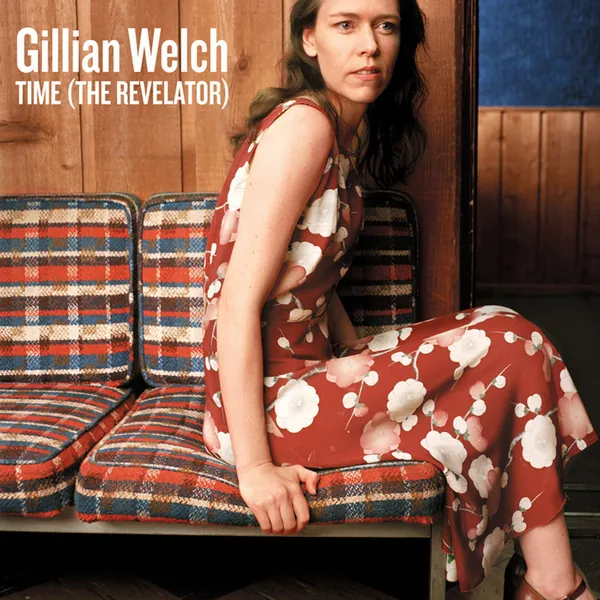
On April 14th, Abraham Lincoln "The Great Emancipator" was shot in the head. On the same calendar day, the Titanic sank, and the 'Okies' fled the Great Dust Bowl storm.
That's the story of the song "Ruination Day", the 2-part centerpiece to Gillian Welch's new album Time (The Revelator), her third and most ambitious album. And there's more. Welch sings about another April 14th, where another monumental tragedy takes place. Music, hard-wrought and significant, is delivered by hard-working folks, and goes unappreciated.
Time fleshes out a large and complex mural about American musical heroes... pioneers who followed their dreams and found either "ruination" or success. Welch is not celebrating fame or audacity...but passion, the very passion for music that has highlighted her as The Real Thing in an industry fraught with fakes.
She and her guitar-wielding sidekick David Rawlings are a force to be reckoned with in American music. Thanks to the Coen Brothers, who have brought them to a larger platform and a brighter spotlight with the soundtrack album to their film O Brother, Where Art Thou?, Welch and Rawlings have a chance to sing to the masses with just their voices and their guitars. And God bless them, they are using this opportunity to draw our attention to our roots.
No, I don't mean they're a cover band or merely mimicking: Gillian's singing style is all her own, and the stories she tells are uniquely potent. But it's as though she went back to where "country music" transformed into commercialized pop with a cowboy hat, picked up the broken thread of soulful, artful folk music, and is picking up where those classic artists left off, bringing it into the future. Ironically, "alt-country", the term given to the music of this rising tide of artists like Welch, Steve Earle, and Ryan Adams, has far more in common with country music than the "top 40" country hits on today's charts.
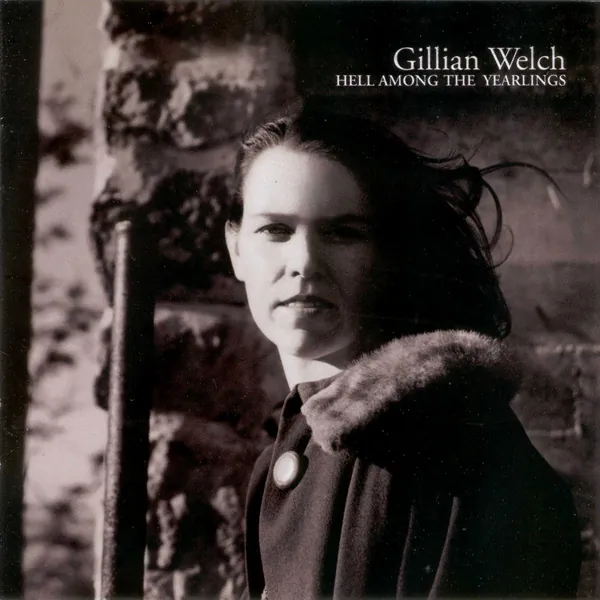
On Welch's previous albums she has reminded us of the heartland gospel sound of the Carter family and the ambition and attitude of a young Emmylou Harris. Her lyrics are rife with Scriptural references and yet rough and dusty with wounded honesty. The songs on her first Revival, and the follow-up Hell Among the Yearlings are already being widely covered by other vocalists.
Time (The Revelator) is also her most personal and groundbreaking work. She still pours her vocals like syrup over her plunking banjo's steadfast strumming. And Rawlings plucks notes sharp and shiny as new nails, and, in excruciatingly beautiful solos between languid dreamy verses, he pushes at dissonance as long as we can take it and then resolves it with yet another inspired flourish. Rawlings also produced this record, clearly having learned much from T-Bone Burnett's work on Revival and Hell Among the Yearlings. But Burnett, perhaps the finest record producer in the world, was focused on the bare-bones songwriting and thus put the spotlight on Welch, holding Rawlings at bay. Here, though, what is evident at the live shows is far more clear...these two are among the most dynamic duos to ever play the Grand Ole Opry, and Rawlings's musicianship is every bit as important as Welch's songs. You are always aware that you're in a room with two people and two microphones, no special effects, no makeup. It's refreshing, immediate, and unadorned. Since anybody can sound good with the right production gloss these days, more and more people are drawn to the thing that can't be mass-produced...raw talent.
Welch's strongest achievement here is the cohesiveness and complexity of her lyrics. Time is practically a concept album, the way songs echo each others' lyrics and themes. Each song either looks backward or forward in time, seeking the brave, the true, and the real.
Elvis struggles to regain the magic of his youth in his final hours, in "Elvis Presley Blues," desiring to die like that other American legend, John Henry, "with a hammer in his hand."
In a live track taken from the O Brother concert album Down from the Mountain, Welch and Rawlings drawl "I Want to Sing that Rock and Roll", an anthem that equates the glory of unleashing their musical passions with "shaking their savior's hand". It's the album's greatest delight.
In "Red Clay Halo," an old-fashioned gospel number that's becoming quite a sing along at their concerts, Welch and Rawlings harmonize about coming to the pearly gates stained with the "red clay" of their earthly struggles, yet another embrace of the dusty authenticity of real work, real sweat, real music. "Now Jordan's banks/they're red and muddy/and the rolling water is wide/But I got no boat/So I'll be good and muddy/when I get to the other side..."
This principle of Time revealing true significance is best demonstrated in the song "My First Lover," when the singer reflects on her first tumble on the floor with a boyfriend. In her memory, the guy is "rather hazy" now; but that Steve Miller song playing on the record player sticks with her. The music is the landmark, the monument on the landscape of her past.
The singer tries to "dream a highway" back to Emmylou Harris and Gram Parsons, and to a hundred other instances of hard work, tragedy, and transcendent beauty in the album's 15-minute closer, a staggering, trance-inducing finale. You can imagine the song running from the beginning of time right through to the end of history, music elevating and honoring the integrity of honest heroes.
It's hard to think of an album so full of ambition and goodwill, so respectful. In celebrating "the good stuff", Welch and Rawlings continue to catch the bug of musical greatness; they're writing classics about the classics. Mining for gold has made them the furthest thing from a flash in the pan.
4.5 tocks
Other coverage for this album
Opus 2002Reviewed by Ruth WilliamsOn her third release, Time (The Revelator), Gillian Welch continues to exhibit her brilliant ability for combining traditional, old-fashioned themes and music with a unique modern perspective. Welch's strong, sure voice reminds me of an old dusty farm, the toil of poor laborers, and the sorrow of an empty still. Her music, infused with guitars, banjos and mandolins, echoes the Depression era and…The Phantom Tollbooth 2001Reviewed by Jason BurtonWhen Gillian Welch chose to title her debut album Revival, she probably didn't expect the name to become a prophecy, but since the release of O Brother Where Art Thou it has become nearly impossible to talk about Gillian without mentioning the platinum selling movie soundtrack which has brought a long marginalized style of music to the attention of the masses. Whether you call Welch's music…Similar sounding releases
 2004Friction BaileyThe Silent Night
 1999Mark BrineAmerican Bleak House
 2004Kate CampbellSing Me Out
 2005Nickel CreekWhy Should the Fire Die?
 2005Steve BellSolace for Seasons of Suffering
 2004James GrantHoly Love