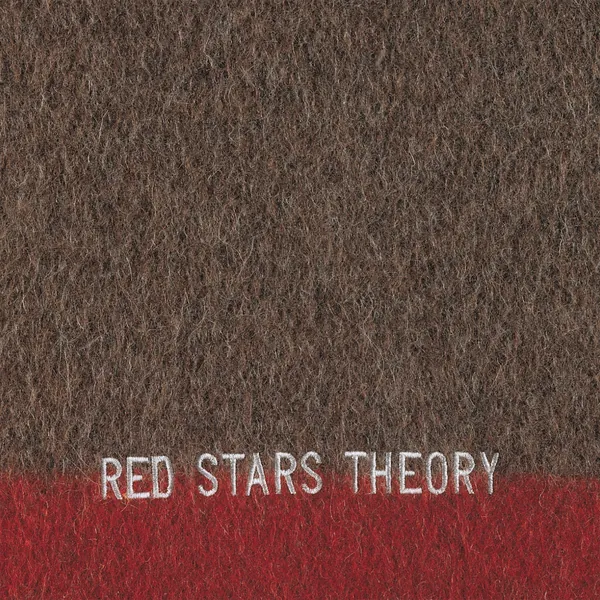
My first exposure to Red Stars Theory came when I saw But Sleep Came Slowly in the local music store. Its cover seemed somewhat Red House Painters-ish, and when I listened to the music, something clicked. It was mild, mellow, and melancholy, without seeming overwhelming. Ever since I heard those brief snippets, something about the music stuck with me. When I heard about Life in a Bubble Can Be Beautiful, I quickly slapped down an order at Burnt Toast Vinyl.
After a few initial listens, I was wondering if I had been mistaken, if those magical sounds I'd heard so many years ago had created expectations that were too high. But more listens, usually done late at night while alone in my room, soon assuaged some, but not all of my worries. Life in a Bubble Can Be Beautiful may not be the "slowcore album to end all slowcore albums" (I can hear the band cringing at that description) I thought it'd be, but it does have its very high points.
Perhaps it's the loping bassline and lazily-strummed guitar on "Combinations and Complications" which, when mixed with the vocals of James Bryan Bertram, produces a strange urge to stretch out on a dusty wooden floor and stare at the ceiling.
The album's best track, the murky instrumental "Parts Per Million," is the closest I've ever heard a song come to sounding like a rainstorm. I don't know about you, but here in Nebraska, we get these huge downpours where the sky turns pitch-black, lightning crackles on the edge of the horizon, and the rain comes down so hard that even Noah would be impressed. This song reminds me of that, with the drums echoing out like distant thunder while guitars and violin dance eerily in the background.
If the album has one weakness, it's the vocals, which is why my favorite tracks are those without vocals, or where the vocals only make slight appearances. Such is the case with "Boring Ghosts," where the vocals echo out in the background like said ghosts, dancing around the acoustic guitar, tambourine, and odd atmospherics.
But the vocals on "September" are the complete opposite. Musically, the song tries to see just how much reverb it can cram between notes and string arrangements (a good thing), but listening to Bertram breathily sing "Would you be my accident investigator?" or "A dreamer can't remember" somewhat undoes the mood. But still, there is something about the song that makes it ideal for thinking about someone far, far away.
Overall, Life in a Bubble Can Be Beautiful leaves me in a bit of a lurch. It's definitely got some great songs, like the aforementioned "Parts Per Million." But there's just enough material that leaves me disappointed (the opener, "How Did This Room Get So White" sounds like a cross between Rachel's and Roadside Monument, and not in a good way) to keep this from being an outstanding album. That's a shame, because if I look at the album's high points, I could listen to a double album of that stuff.