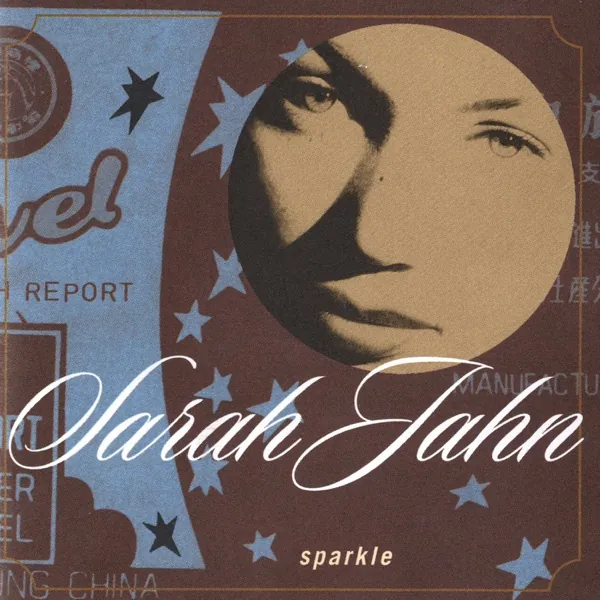
You can't judge a book by its cover, or so the saying goes. The general principle may be applied to recorded music and, thankfully, applies literally to Sarah Jahn's debut release on Warner Alliance records, Sparkle.
With the faux packaging cover, the artsy pictures of the artist on each page, and the multiple typefaces and scattered layouts common in almost any magazine ad, the packaging seems to promise this week's pop queen. And Sarah Jahn's rapid journey from music major at a Christian college to signed recording artist (see the Tollbooth's interview) might be taken, by the cynical, as proof that she is this week's pop queen, picked to record copies of what's hot, and packaged for the market. But, happily, the music inside delivers better.
Sarah has the chops to be taken seriously. Her vocals are smooth and strong, so that the lyrics come through clearly. I find good comparisons difficult to make, but Sarah's voice doesn't have the edge of a Tiffany Arbuckle or an Alanis Morissette, or the little-girl quality of a Leigh Bingham Nash. Sarah's voice has a strength not unlike Annie Lennox of the 80s band "The Eurythmics." I might even call it an r&b feel.
The edge that there is to the songs on Sparkle is produced more by the interplay of lyrical and musical arrangement than by vocal quality. For instance in "Chronic," a stripped down musical arrangement layers various keyboard and guitar effects just below a plaintive vocal track. The result conveys an intense desire for healing without vocal histrionics or musical frenzy.
The music is largely retro in style. There are acoustic and electric guitars, some jangly, and some jazzy tinges played by Matt Bronleewe and Glenn Rosenstein. There is an almost bewildering variety of acoustic and electronic keyboards (accordion, piano, 70's-style electronic keyboard effects, and Hammond organ) played by Jeremy Bose. Miguel De Jesus plays the bass. In describing the finished product, Sarah displays a sense of humor: the liner notes contain a disclaimer that the album was "recorded and mixed using the most inappropriate combination of digital and analog technology" and stating that the resulting sound, along with any flaws, was "approved by the artist. So don't even go there, pancake."
On the lyrical side, Sarah is not content to rely on the formulas for pop hits in general or CCM hits in particular. She wrote or co-wrote most of the songs on the album, and with her various writing partners, she covers a wide variety of territory with refreshing honesty.
In opposition to the CCM-standard formulaic profession of faith, "Paradox" welcomes doubt as an opportunity for growth in faith:
I can trust the Lord with all my might
In the light of what I know.
But if I close the door on doubt I find
That the light can never grow.
Two prominent and related themes are memory and the passage of time, with their inevitable losses. "Drinking Water" focuses on the relentless pace of everyday life:
The world is spinning
Only further complicating
Life's ambitions
Adding to my inhibitions
The sun is rising
Always shining with or without me.
There's no stopping everything.
The positives and negatives of memory appear in "Face:" "The old feeling comes again and makes its unwelcome.....Remembrance can often be soothing."
Songs like "Brand New Name" ("Feel the memory/ See the shaken structures/In the past/ In the Pain/ Cleanse the dusty dwelling/ Call my heart a brand new name") and "Crucible" ("Is it the hurting now or/ Knowing where I have been/ That makes me turn around / and turn right back again") speak an intense desire for healing from the ravages of time.
Healing of various hurts is another prominent theme. "Chronic" describes the struggles Sarah's mother has had with Chronic Fatigue Syndrome:
I want to be free like I used to be.
I want to be healed . . .
I've been searching for the
I've been dying for the
I've been waiting for the cure.
This is not CCM standard "I'm a Christian and my life is unmitigated blessing" triumphalism in glitzy packaging. But while expressing longing, she ends the album expressing her faith and hope in songs like "Lullaby," "I Found the Time," and "Home."
This is a strong, very listenable first album, from a young artist not content to follow the formula for hits in the CCM market, and whose future seems promising.
4 tocks
Other coverage for this album
The Lighthouse November 1997Reviewed by Beau BlackSarah Jahn's indie CD caught my attention last year, as well as that of the GMA, who awarded her their Spotlight artist award (a distinction she shares with Jars of Clay and new band Reality Check). That disc showcased her rich voice and introspective, darkly catchy songwriting, but it did little to prepare me for her Warner Alliance debut. So smooth is Sparkle, so different from the pack…Similar sounding releases
 1997Jars of ClayMuch Afraid
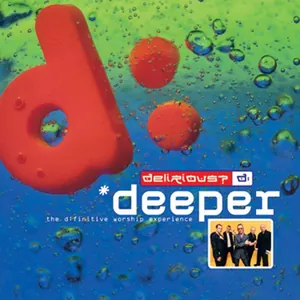 2001Delirious?deeper: the d:finitive worship experience
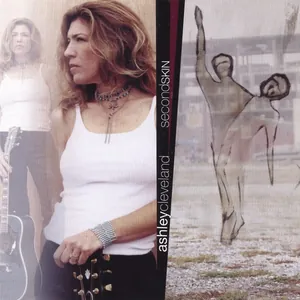 2002Ashley ClevelandSecond Skin
 2003Tom WehrleSomething You Can't Find
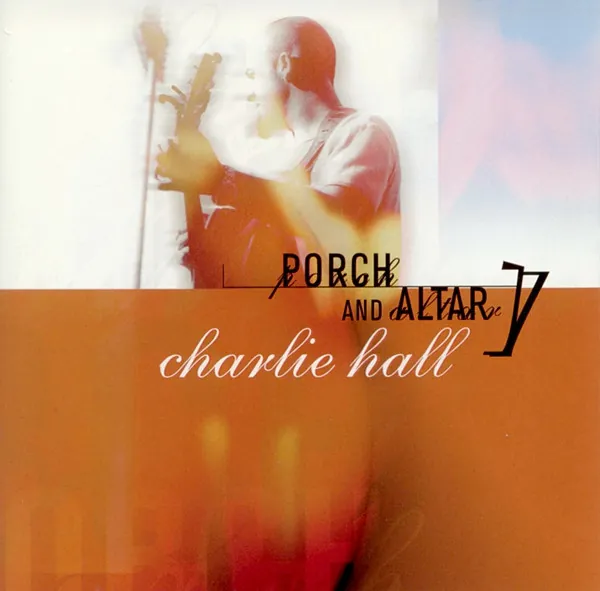 2001Charlie HallPorch and Altar
 1997PFRThe Late Great PFR