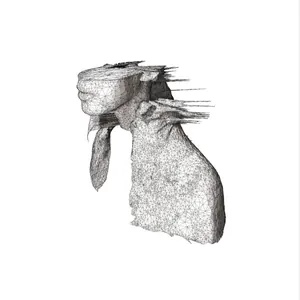
Author's Note: This review might not be as in depth as some of my usual ones - I was excited about the new Coldplay album, and it's been a while since I've been able to tell you about an album before its release date. These are just my initial impressions of what promises to be one of the best releases of the year 2002, and I will likely update after I have the album in my hands and I've had more time to digest it.
Anyone interested can preview the album for themselves at http://www.arushofbloodtothehead.com. It's free - the only catch is that you need the Flash player and likely a "high speed" Internet connection. They also catch you upon entry and get you to sign up for the band's mailing list. The preview application may slow down your computer's performance, as it takes up a lot of CPU, and there's no method of pausing it or skipping around between tracks, so be prepared to take in the entire album in one sitting, uninterrupted.
Coldplay established themselves as the kings of slow-burning Brit-rock with their 2000 label debut, Parachutes. While they managed to catch the attention of American audiences with their melancholy singles "Yellow", "Shiver", and "Trouble", I think a lot of us who gave the album a spin weren't quite sure what all the fuss was about. Parachutes was one of those albums that was at once deeply intriguing and incredibly thin, maintaining a mostly slow pace and containing more than a few songs that were minimal on lyrical content. As a result, the album was short and uneven, but darn it if those songs didn't lodge themselves in my brain. Coldplay seems to have perfected the "sneak attack" method, employing atmospheric guitar techniques, an emphasis on minor key in several of their songs, and an overall "melancholy hopeless romantic" attitude that walks a tightrope to avoid being too syrupy sweet or too depressing. They also know when to drop a piano in to sweeten the mix, as evidenced on fan favorites "Trouble" and "Everything's Not Lost".
So, has much changed on their much-talked-about 2002 release, A Rush of Blood to the Head? Yes and no. I'll be the first to say that they've taken most of the elements that worked on Parachutes and economy-sized them - there's a liberal dose of the spacey guitar and piano we've grown to love, and lyrically, Chris Martin offers us another bittersweet serenade of introspective apologies in many of these songs. Where I have to give the band credit for trying something new is on the more rocking numbers (or rather, the fact that there are a few more rocking numbers). Outside of "Shiver" and maybe "Yellow", Parachutes was capable of lulling us into a pensive sleep. Rush certainly has its sleepier moments, and I've come to look forward to those since Coldplay's so good at creating that atmosphere, but I'm glad to see a better balance. Also missing are the song fragments that caused Parachutes to be so short - the title track, "Don't Panic", and the hidden track were all very short songs, which is fine on a longer album, but barely tolerable on an album with only ten tracks to begin with. All of Rush's ten tracks (plus the hidden song) are full-length, and I'd venture to say that most of them have a lot to say.
"Politik"
Wounds that heal and cracks that fix
Those expecting the gentle opening of Parachutes are in for a rude awakening here. While I wouldn't term it "hard rock", the band clearly has some pent-up energy to get out of their system, and they do it by systematically hammering on two chords that at first don't quite seem to go together. When Chris Martin starts singing, he's got more of a sneer than we're used to from him, which given the title, might lead you to believe that "Politik" is a sarcastic jab at the government. Maybe it is, maybe it isn't - the lyrics are on par with something Radiohead might come up with, though slightly more structured, since it returns to a chorus where Chris wails "Open up your eyes!" It's something of a cross between the persistent downstroke guitar style of "Yellow", the raw energy release of "Shiver", and Radiohead's "Electioneering".
"In My Place"
I was lost, I was lost, crossed lines that I shouldn't have crossed
The album's first radio single is as worthy of a predecessor to "Yellow" as you're likely to find on this album, if that's what you're looking for. It's not as easily recognizable as "Yellow", opting to open with nothing but drums and then bring in a delicious, ringing guitar line to carry the tune. The overall lyrical theme here seems to be an apology - this'll be familiar ground to anyone who liked "Trouble". Chris seems to be pondering the damage his transgressions have done to a relationship, asking her "How long must you wait for it?", as if to imply that he's aware of the problem, but slow to change. (I can relate to that.) Chris also continues in his habit of "singing about singing" - he pleads with her to "come back and sing to me". Nothing terribly new for the band (and I've heard they've already worn the tune out on the road), but a good choice to re-introduce the band to radio listeners.
"God Put a Smile Upon Your Face"
Your guess is as good as mine
Lyrically, this song continues the theme of "In My Place", starting off with acoustic guitars, but the tone of the electric guitar and the steady drum backbeat bring to mind more of a "classic rock" attitude. This one's got a darker, more tense chord structure - an approach that seems to be working well for the band, since it speaks to the desperate state this relationship appears to be in. In this song, a couple seems to be struggling to work out a disagreement, to figure out "where to draw the line", but they can't, because as Chris explains, "When you work it out I'm worse than you." He seems to imply that she is handling the situation with "style" and "grace" due to her smile - but the song has a slightly sarcastic quality to it, as if her smile is smug or condescending. Not exactly the happy song you'd expect from the title, but certainly some of the more intriguing lyrical output the band has given us so far.
"The Scientist"
I was just guessing at numbers and figures, pulling the puzzles apart
Yum... this song just makes me melt. Coldplay has a way of constructing songs that sound like they're built off of a classic melody you've heard somewhere before in your life. In particular, the piano intro here has a tone to it that makes it sound like it's from a previous century. At first it may seem like an attempt at another "Trouble", but I actually like this one even more than "Trouble", because it tackles the subject of love through the eyes of a person who has a habit of viewing everything through a cold, logical, scientific lens. He realizes he's made everything more complicated than he needs to be, and that all he wants to do is "go back to the start", when love was easier. I guess the song hits me on two sides - it toys with my hopeless romantic heart and my mathematical mind. (It actually sounds like it should've been on the soundtrack to the recent remake of The Time Machine - alas, the song came out too late and the movie wasn't so hot anyway.) My only complaint is that the song seems to drag out once the drums and slightly muddy electric guitars enter the picture, but that's okay; the ending of "Trouble" dragged a bit too.
"Clocks"
Come out upon my seas, curse missed opportunities
Here the piano makes another appropriate contribution, this time to a more upbeat song. In many ways, this song feels like a more hurried and tense extension of "The Scientist", though lyrically it's a bit more oblique, including an odd reference to William Tell and something about taming tigers (?). It doesn't make much sense on its own, but it works well in conjunction with the last track to convince me that I'm traveling through time to different points of Chris's love story. As with Coldplay's last album, if the music is tasty, I don't mind so much that the lyrics are confusing and somewhat minimal.
"Daylight"
On a hilltop, on a skyrise, like a firstborn child
I adore the main guitar riff on this song - it certainly repeats enough times to ensure that the song will get stuck in your head. Much like "Yellow", this upbeat tune would pass well as a future radio single. It's got an optimistic, hopeful atmosphere, grounded by some sweet "ooh"s and "yeah"s in the shining chorus, a strange, slightly Middle Eastern vibe during the verses, and a repetitive lyric tagged on to the end to maintain the momentum - "Slowly breaking through the daylight". It might take a few listens to notice that there's not as much going on lyrically as you originally thought, which is why it reminds me of "Yellow" - write the lyrics down on paper and they hardly say anything at all. Chris makes it seem like there's more to the song because he drags out each phrase when singing the verses. Weird. And yet, it's still one of my favorite tracks on the album.
"Green Eyes"
Anyone who tried to deny you, must be out of their mind
I guess Coldplay's working their way through the color wheel, because here we have a song about green instead of yellow. I'll admit that the gentle, easygoing British folk mood of the song makes it seem out of place at first - it's an expected musical mode for Coldplay, but not having employed it this far into the album, it almost doesn't seem right at this point. I guess it's more like "Sparks" in that respect, and that was my least favorite track on Parachutes because it kind of stayed in a holding pattern. "Green Eyes" does bring in the rest of the band later, but overall the structure is still a little too bright to fit in comfortably with the rest of the album. The lyrics seem to be about a girl who Chris thinks is beautiful even though others have passed her by - perhaps someone who wants to be in the spotlight, but is regarded by most as being ordinary. It's interesting that he says "Honey, you are the sea upon which I float", since there's a reference to the sea in "The Scientist" as well. These little clues are what makes the album feel like a connected story instead of a bunch of repetitive songs on a similar subject.
"Warning Sign"
I started looking and the bubble burst, I started looking for excuses
The tempo and musical mood of this song make me think of Collective Soul's classic "The World I Know", mostly due to the light strings. It's one of those songs that I'd expect to be more exciting from the title, much like "High Speed" on the last album, but still, it's got some interesting lyrics that give us more "clues" about this misfit relationship Chris seems to still be harping on. Here he's telling the girl that he was looking for a warning sign, as if he couldn't take love at face value and he wanted to get under the hood and find something wrong with it. It seems to be his looking for problems that created the problems, or something like that. Musically, I don't think the song's very interesting (I didn't think "The World I Know" was all that interesting, just as a point of reference), and the way everything falls away except piano at the end makes me once again think of "Trouble", but I'm not as endeared by this attempt to duplicate that mood.
"A Whisper"
You just won't break, should I go forwards or backwards?
The album suddenly gets upbeat here with a slightly choppy guitar riff and drum pattern creating a wobbly 6/8 rhythm - I'm detecting a slight rockabilly influence here, as if Coldplay just robbed a bank in the Old West and they're playing this song on a getaway train. (I know; my mind conjures up strange images sometimes.) It's good to see Coldplay doing a better job at pacing an album, since I'm sure most people would have expected the mood to stay mellow after the last two tracks. This song chooses to make its point through repetition, as Chris sings in hushed tones over the main guitar riff, "A whisper, whisper, whisper" - Connecting this song to an earlier theme is the line "I hear the sound of the ticking of clocks", though at this point I'm not able to get much of anything new out of the lyrics. The music is catchy, but I kind of feel like the album's in limbo at this point.
"A Rush of Blood to the Head"
You said I'm gonna buy a gun and start a war, if you can tell me something worth fighting for
The last "official" track on the album starts off quiet and acoustic, but if you're expecting another "Everything's Not Lost", then think again. The lyrical outlook has suddenly gone from melancholy to mildly disturbing, as Chris Martin is exploring his darker side. The musical mood is a little creepier to match, building much like the paranoid "Spies". At first his desire to "buy this place and burn it down" seems out of place on an album of mostly apologetic love songs, but pay close attention - there's a common thread here. Chris's appetite for death and destruction is propelled by something - likely a desire to prove himself to a lost love. I guess my only criticism is that it's strikingly similar to the song "Last Train" by fellow nice-guy Brit-rock band Travis - I'm specifically thinking of the line "I'm gonna buy a gun, I'm gonna shoot everything, everyone, and then I'm coming for you, 'cause it was you that drove me to." Coldplay's equivalent is "I'm gonna buy this place and start a fire, stand here until I fill all your heart's desires." Even more unsettling is his plan to plead innocence, to "blame it on a rush of blood to the head". Could it be that the "scientist" is a mad scientist who hates himself so much for mistakes he can't take back that he's ready to go postal, because destroying everything will give him a chance to start over? I don't know. It's certainly not a very uplifting track to end on (thank God for the hidden track), but at the same time, it's a work of diabolical genius.
"Amsterdam"
And I know I'm dead on the surface, but I am screaming underneath
The album's hidden track takes us back into a gentler mood with yet another piano-based ballad. The lyrics seem to depict a reflection upon past regrets, things that cannot be changed. Instead of wanting to destroy the world, this time the protagonist seems borderline suicidal, and there's not a whole lot of hope coming from this song other than the line "time is on your side", and the final verse in which an attempt at hanging himself results in a nick-of-time rescue: "You came along and you cut me loose". Interesting thought to end on. The song ends with a typical Coldplay finale, as the entire band joins in to accompany that lonely piano, giving the illusion of bright hope amidst the darkness, but it's a bittersweet and baffling ending at best.
It's likely going to take a few spins through this album to fully "get it". I realized quite a bit as I was writing this review, and what I've seen makes this album appear like more of a unified whole than the fragmented Parachutes was. A Rush of Blood to the Head is certainly an interesting musical journey (even if I miss having a brooding, all acoustic tune like "We Never Change"). In some respects, I'd think of the band as a more structured version of Radiohead pining away over a lost love. If you like Radiohead because they're purposefully less structured and they pine away over technology instead, then be my guest and continue to enjoy your Radiohead CD's. As for me, I'm gonna buy this disc and see it burn.
David's Score: 4/5
Other coverage for this album
The Phantom Tollbooth 2002Reviewed by Vik BansalThese days, when a British band shifts seven-figure quantities of albums in the US, it is such a rare event that it warrants further analysis. A few years ago, with Sixteen Stone and Razorblade Suitcase, Bush proved that the Brits could rock like its Seattle counterparts. Meanwhile, with What's The Story... and Be Here Now, Oasis demonstrated the sad fact that millions of people are susceptible…The Phantom Tollbooth 2002Reviewed by Jeffrey OverstreetSome bands wear their influences on their sleeve. The members of Coldplay wear their influences on their heads. U2, Oasis, Jeff Buckley, Radiohead, and the Beatles all collide in this band's crystalline, sun-shiny, polished sound. This, their crucial sophomore effort, takes the acoustic pop-rock of Parachutes and morphs it into Coldplay 2.0... an electric-guitar/keyboard version that doubles the…The Phantom Tollbooth 2002Reviewed by Brendan BoughenGod gave me style and gave me grace, God put a smile upon my face. In the universe of contemporary music where success still seems to go hand-in-hand with excess - lyrically and musically speaking - Coldplay shouldn't be racking up album sales in the millions, as they did for their debut Parachutes. These days it often seems the only time a band wears their heart on the sleeve in a rock song is…Opus 2002Reviewed by Paul NewboldColdplay have always been the good guys, the honest, respectable, and reliable band. They seem to fluently churn out feel-good anthems from nowhere. Their sound is unmistakable, a warm acoustic guitar with Chris Martin's amenable lyrics. However, A Rush of Blood to the Head hints at a darker side, which may have been overlooked through the "good as gold" smiles and glossy charm of their debut…Similar sounding releases
 2004Jonathan Inc.Things Done and Left Undone
 2003Wayne EverettKingsQueens
 2003Bell X1Music in Mouth
 2000The Grapes of WrathField Trip
 2002Matt RedmanWhere Angels Fear To Tread
 2004Iain ArcherFlood the Tanks