Sufjan Stevens' Enjoy Your Rabbit still ranks as one of my most beloved electronic albums. But I remember when I first listened to it. I found it rather daunting, more a ragged mass of sonic debris than anything else. However, with repeated listens, the album revealed itself like a kaleidoscope. Each listen coalesced into patterns of bright, colorful sound that seemed fresh and new with each listen. Yes, it was messy and chaotic, but it was also utterly exhilarating, exhibiting a sense of wonder one doesn't often find in music (much less in electronic music).
Needless to say, I was pretty excited to hear that Stevens would be releasing a new disc this year. I couldn't help but wonder what he had planned for Enjoy Your Rabbit's follow-up. I had interviewed him at last year's Cornerstone, and he mentioned that he never wanted to make an electronic album like Enjoy Your Rabbit again.
At first, a comment like that might seem alarming, and one listen to Michigan does indeed reveal that Stevens' fascination with electronics, though still present, has become more subdued this time around. However, this is by no means a bad thing, as Stevens' love for crafting beautiful, complex arrangements is still in full effect.
No song is a simple affair for Stevens, even if it's the sparsest of acoustic ballads. Nearly all of his songs are graced with layer upon layer of vocals and instrumentation, and his arrangements are so well done they seem practically effortless. Stevens brings an amazing number of nuances to his music, nuances that are often hidden within the folds of Stevens' songs.
I'll wager that even after you've listened to Michigan countless times, you'll still hear some new sound or fragment that makes it seem new all over again.
It might be that extra banjo snippet you missed the first 5 times you heard "For The Widows In Paradise..." Or maybe the way the guitar, piano, organ, and vibes glide past each other on "All Good Naysayers..." Perhaps it's the bells, trumpets, and vocal peeps (eat your heart out, Laetitia Sadier!) sprinkled throughout "Oh Detroit, Lift Up Your Weary Head!" Or the seemingly endless cascade of vibes and xylophone on "Tahquamenon Falls," which make it sound as if you're actually standing under those waters as they wash over you in slow motion.
Even when Stevens strips away the many layers of sounds (or at least mutes them somewhat), it by no means diminishes his songs. "Romulus" tells of a child both ashamed of and longing for his estranged mother. The yearning contained in lyrics such as "She came to Romulus for a day/Her Chevrolet broke down/We prayed it'd never be fixed or found" are perfectly framed by Stevens' soft vocals and gentle guitar and banjo picking. Damien Jurado would eagerly sell his right arm to have this song on one of his albums, and deservedly so.
"Oh God, Where Are You Now?" is one of the album's most pensive moments. Stevens quietly muses "There's no other man who could raise the dead/So do what you can to anoint my head" over a sparse piano melody fleshed out with guitars and horns. It's a song of quiet contemplation, a recorded prayer that's equal parts resignation and Job-like questioning.
When Stevens works in other elements, such as the detuned guitars skirting the song's edge, they serve only to enhance it, in this case underscoring the doubt in Stevens' lyrics. The song slowly expands over its course, eventually losing itself in a swirl of cymbals, horns, and choral voices. However, even as it grows in size and scope, it never loses that intimate, introspective feel.
As you travel through Michigan, you'll hear Nick Drake's breathy vocals, Stereolab's breezy refrains, Patrick Phelan's glassy tones, The Sea And Cake's jazzy flow, and Steve Reich's lush compositions. But Stevens' music unfolds at such a graceful pace, and with such heart, that these references are ultimately rendered trivial. To really do Michigan justice, you'd probably need to write a full-length review of every track. Hopefully, these brief descriptions will suffice.
Michigan is actually the first in a series of albums called "The 50 States," which has Stevens -- you guessed it! -- composing an album for each of these United States. With Michigan (which kicks off the series by distinction of being his birthplace), Stevens has set an incredibly high bar for himself. However, if he can keep up the quality displayed here -- and based on his previous recordings, I have no reason to doubt that -- "The 50 States" will be something truly special indeed. I can't wait to hear what he comes up with for Nebraska!
Other coverage for this album
The Phantom Tollbooth 2003Reviewed by Dave KerschbaumThe history, folklore and traditions of Michigan are part of everyone native to the Great Lakes State. If you're like most from the area, your origins make themselves known in the flat tone of your short-A sounds, in the way you point to a spot on your palm when describing where you live, and in the bumper sticker on your car that says, "Say yah to da UP, eh?" If you're an artist and a poet like…Similar sounding releases
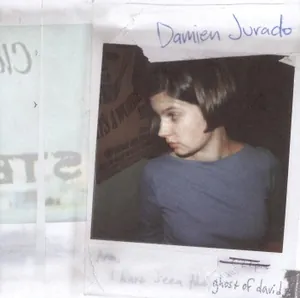 2000Damien JuradoGhost of David
 2001Liz JanesDone Gone Fire
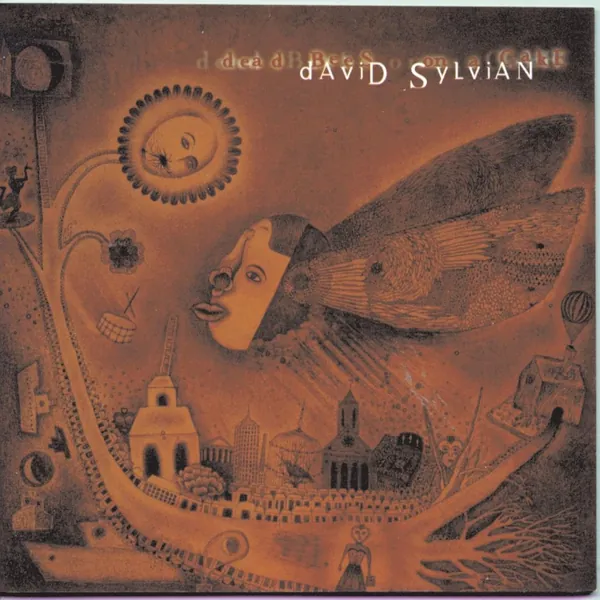 1999David SylvianDead Bees on a Cake
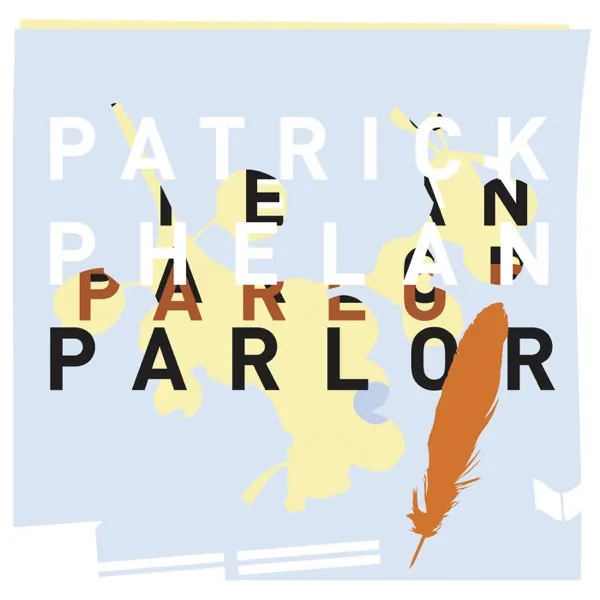 2001Patrick PhelanParlor
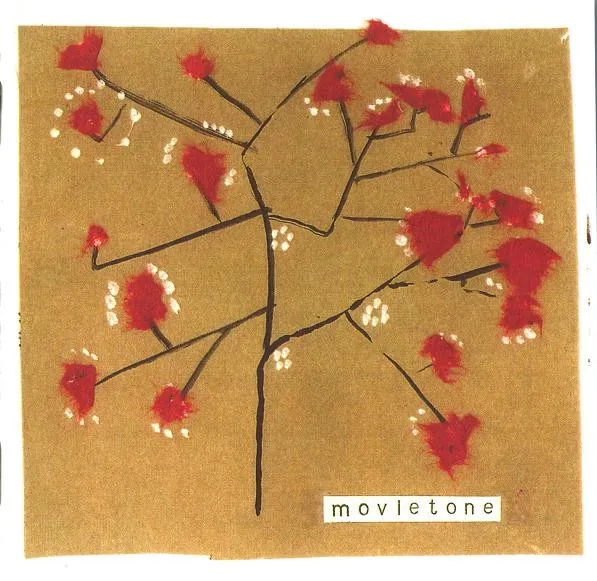 2000MovietoneThe Blossom Filled Streets
 2002Andrew BirdWeather Systems