It was a very dark, very rainy afternoon that the artist in question dropped by my low income apartment in downtown Seattle in autumn, 1992. I was treacherously pondering going back to my old ways; thinking back on the blurry days of chemical addiction that gave me sudden bliss and a departure from the torture of the moment -- something to do with my hands -- something to do far from the ache of my soul. I was listening to a cassette of Bruce Springsteen's Nebraska, floating through the misery of those heartland characters, their misery as big as the universe and as slight as murder. Glad I was far from my born again brother in Eastern Washington who would have stepped in my way from making a purchase. I was ready to walk up to Wall of Sound, an eclectic record store in my neighborhood, and hock my multi-disc CD collection of Jack Kerouac readings.
As I got my overcoat on, a skinny punk kid named Damien knocked on the door. He came into my unlit studio in his own tattered punk rock overcoat, helped himself to an icewater and a meager snack, and yanked out Nebraska and slammed into the Aiwa boombox his own recent experiment, as we talked about Black Flag, or something. The sounds were different from what I loved about Damien's hardcore, which I'd been a big fan of since seeing him screaming his head off at a Vineyard youth showcase the summer before. It was a quiet ambient keyboard piece, minimalist and melancholy, sounding just like the day we were floating in -- a day of regret and possible redemption, of emotion and eternity. It wasn't hard music, but it was extreme music. It was the same kind of vibe Bob Mould of Husker Du showed when he'd smear the sweat and blood off of his fingers from throttling his flying 'V' and pick up an acoustic to do "Hardly Getting Over It" or "Too Far Down" on the Candy Apple Grey album. Or when Henry Rollins would read his fraternal love poems to his murdered best friend Joe Cole, which didn't need Marshall stacks to get across their pain and protest. This was naked, raw Damien. And I loved it as much as the Damien I loved watching grind out his teenage demons in a swirl of feedback dredge. But it did kind of surprise me. And it did kind of heal me.
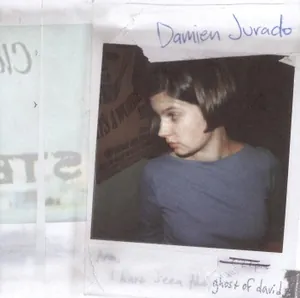
Now I swear that keyboard song I heard that day is the melodic intro and hook to "Parking Lot," a song halfway through Ghost of David, his new album for SubPop records. Even though this version is guest sung by his friend Roseanne Thomas, it's still Damien telling me there's someone following me through the black rain. This is appropriate, as this album helps to heal me in a way that very afternoon did. I'm not the only stranger in town walking through with an old tape of ghosts in his overcoat pocket, looking for a true friend.
I could try to convince you of Damien's historical importance -- that he seems to be writing the aching, spiritual pop-folk threnodies Bruce Springsteen probably wishes he could now; that his topics about indifferent lovers and small deaths and broken hearts and raging minds that can't forget the damage done are coded through some of the strongest songwriting imagery to come down the pike in years. For HM readers, I will say these are the songs of an absolute rocker set to gentle, organic, artful sonic statements in themselves. Just like Springsteen, or Mould, or the 77s Mike Roe, Damien has true soul. These are anthems no less powerful than the ones those guys write -- actually, a lot moreso, as Damien isn't dabbling in balladry, but is committed to making his rural persona as authentic as his fellowship to fellow urban aliens of this world. The invasive Spirit of God is all over this album; it's haunted by the Holy Ghost in the way a Howard Finster painting seems to be, a William Faulkner story feels, a greasy family church overgrown with kudzu in the middle of nowhere is. Don't miss the chance to worship, to feel "blood on blood."
Yeah, I hawked that Kerouac set that day he came over; we walked it wrapped in bags through the downpour and they gave me a lame 15 bucks for it...and I bought Damien and I lunch at a mini-mart with the money. The sun never came out, but we had Mountain Dew and Sun Chips and Bagel Dogs and a few old records to play.
Other coverage for this album
Opus 2001Reviewed by Jason MoreheadThe characters that have populated Damien Jurado's previous albums have always had to deal with the challenges of life. Topics such as loneliness, regret, kidnapping, and broken marriages are common themes that wove themselves throughout Jurado's songwriting, as his various characters struggled to make a better life for themselves. On Ghost of David, they come up against the greatest challenge of…Bandoppler 2000Reviewed by Sarah Jones"Ann, I have seen the ghost of David..." Ghost of David evidences Seattle singer/songwriter Damien Jurado's continuous maturing as an artist since his previous full-length, 1999's Rehearsals for Departure (Sub Pop). And rather than focusing on composing catchy melodies, finds him concentrating his keen storytelling talents on crafting songs more lyrically complex, while also effectively adding a…Similar sounding releases
 2004CastanetsCathedral
 2005Static FilmsLove of Light
 1999LowSecret Name
 2001ClairvoyantsYour New Boundaries
 1999EmpressEmpress
 1999Sufjan StevensA Sun Came
More from Damien Jurado
 2004This Fabulous Century
 2005On My Way to Absence
 1997Waters Ave. S.
 2002I Break Chairs
 2004Just in Time for Something
 2003Holding His Breath