When I think of Pedro The Lion, two words come to mind... Thomas Kinkade, the so-called "Painter Of Light™." His paintings are idyllic little settings that usually involve a lighthouse, small cottage, or gazebo set in a perpetual springtime where it's always Sunday morning. There's usually a pond or creek nearby, and gardens just bursting into bloom. Everything is bathed in a soft, tranquil light. When looking at one, you're practically overwhelmed by how right, perfect, and clean everything is.
Not content with just painting such a world, Kinkade set about translating his canvas into the real world. The result: a gated community of homes inspired by his paintings, a place where "families thrive, children grow up and memories are made." I look at these houses, which look so pretty and elegant, but feel so pre-fabricated and self-righteous, and I wonder if they're what David Bazan had in mind when he sings "On the one side, the bad half live in wickedness/And on the other side... the good half live in arrogance" ("Magazine").
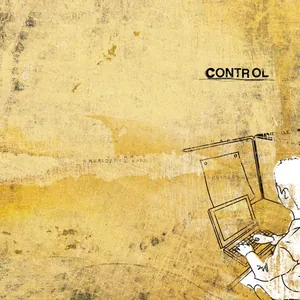
Described as a tale of a "hyper-modern marriage gone wrong," Control is another concept album that reveals the lives of the supposedly righteous for the moral travesties they really are. It's a logical progression from Winners Never Quit, and a far stronger, more aggressive album. Indeed, songs like "Magazine," "Priests And Paramedics," and the crushing "Second Best" are some of the best Bazan has ever written. And lyrically, it's Bazan at his darkest and most intense.
The album opens up with a romantic vignette -- a walk on the beach -- that takes a sadder turn when Bazan sings "I could never divorce you without a good reason... but for now I need you." With such pillow talk, it should come as no surprise that the affair is in full swing by the next song. "Rapture" may raise some Christian eyebrows with its equation of physical lust to spiritual fulfillment, but it's a perfect picture of just how low these characters have sunk to bring meaning to their lives.
Over the next couple of songs, Bazan deliberately picks apart the veneer of these peoples' lives. The corporate power trip of "Penetration," the dysfunctionalisms of "Indian Summer" and "Progress," the anger of "Rehearsal." But just when we're righteously indignant, he saves his deepest cuts for Christian legalism ("Magazine"), something that's always been Bazan's sweet spot.
Here, he draws a perfect metaphor for the difference between grace and the law when he sings "I feel the darkness growing stronger as you cram light down my throat." Such a line nicely sums up Paul's theology that the law (which Christians are so quick to enforce) is often that which brings out the sin in people. The very thing that should save them is what ends up driving them towards the album's tragic end.
Like all Pedro The Lion albums, Control has powerful, honest songs... but no easy answers, if any answers at all. Even those who should have them don't, instead starkly claiming "We're all gonna die/Could be twenty years, could be tonight/Lately I have been wondering why/We go to so much trouble/To postpone the unavoidable/And prolong the pain of being alive" ("Priests And Paramedics").
Bazan's refusal to wrap everything up in a clean little package, something that seems to be a prerequisite these days, gives his songs their impact and intensity. His lyrics may be seedier this time around -- those semen and shit references are bound to be hits with the youth group -- but they also paint a brutally honest portrait of lives who need grace and forgiveness, and yet constantly turn away, or are turned away, from it.
Some reviewers are saying how nice it is that Bazan is finally writing songs that don't tackle issues of faith. I find that amusing, because Control tackles those issues with as much gusto as anything else Bazan has done, if not more so. The themes he has always written about -- human depravity, Christian legalism, and ultimately, our unquenchable need and desire for God's grace -- are as prevalent as before. His words may be a little blunter, his references to Divinity a little more oblique, but Bazan is as soul-searching as ever.
My job just recently moved to some new offices in the "suburbs" of Lincoln, for lack of a better term. I see the new developments, the whitewashed houses and perfect yards. They may not be as picturesque as a Kinkade development, but the desire is the same: to create a safe, idealized community (not unlike the Church).
But how many of the people living in those houses are alcoholics, abusers, pedophiles, and adulterers? How many of them are perfect and right on the outside, but hiding scars, regrets, and sins on the inside? Taking a step back, I realize I have to ask the same thing of those who sit next to me on Sunday mornings. And sometimes, I even have to ask those things while looking in the mirror. If the fictional characters in Control are in such dire need of grace, how much more so those suburbanites, those fellow churchgoers, myself?
Other coverage for this album
The Phantom Tollbooth 2003Reviewed by David SongDavid Bazan was the driving force behind Pedro the Lion, a Seattle band described as indie/emo rock. Eventually, Pedro the Lion stripped down to Bazan and his guitar, but with Control, there is no sign of him stopping or slowing down. But while Bazan might seem to Christian indie rock what Relient K is to punk, or Zao was to hardcore, Control contains exactly the kind of material that consumers…Decapolis March 2002Reviewed by Scott HatchWhile billed as a departure from the standard Pedro the Lion format, Control basically carries on in the same manner as the traditional cannon. Granted, the drum beats are increasingly complicated, there are more keyboard parts, and the album more fully rocks out than previous efforts. The influence of Bedhead's Transaction de Novo is still present, but much less than on It's Hard to Find a…Decapolis March 2002Reviewed by Matt ModrichThis is probably one of the most depressing albums of the year. It's even darker than David Bazan's 2000 release "Winners Never Quit." Which is surprising considering that album was about a political candidate who bought his way into office and killed his wife because she was going to rat him out. His latest project "Control" tells the story of a man who has an affair and is later killed by his…ReAL Magazine 2002Reviewed by Jeremy KeillorLyrically this is the edgiest CD by a "Christian" band. Ten songs tell of a marriage gone wrong. Always the enemy of easy answers David Bazan leaves the listener with the lines, "wouldn't it be wonderful if everything were meaningless but everything is so meaningful and most everything turns to s***" Musically there is a tougher rock sound with hints of punk on a couple songs. My opinion: get…The Phantom Tollbooth 2002Reviewed by Trae CadenheadFrom listening to all the previous Pedro the Lion albums, I can make a few characterizations about the music that singer/lyricist/guitarist Dave Bazan makes: it sounds just right, it does a masterful job of storytelling, and it is controversial. The new album Control lives up to all of these standards to an even higher degree than any previous Pedro the Lion CD. For those who have missed out on…Similar sounding releases
 2002...And You Will Know Us by the Trail of DeadSource Tags and Codes
 1998DumpsterSee Through Me
 2003LoghThe Raging Sun
 2003The Appleseed CastTwo Conversations
 2002EeFor 100 We Try Harder
 Annie QuickBigger
More from Pedro the Lion
 1997Whole EP
 2004Achilles Heel
 2000Winners Never Quit
 1999The Only Reason I Feel Secure
 2000Progress
 1998It's Hard to Find a Friend